Category Archives: India

Temple and Thali

Madurai is an ancient south Indian city whose main attraction is the massive and bustling Meenakshi temple.  We drove here from Munnar to spend a day and a half and two nights.  If you are considering staying longer, please reconsider.  The temple is remarkable but otherwise the city has little to commend it.  Except for the thali lunch at Aarathy.

Check out the temple gopuras (towers) from a distance for some perspective and then the up close shots to appreciate the detail of each gopura.

We stayed at Hotel Padmam which sports a fine location but I don’t recommend it.  We had to ask twice to get toilet paper, soap and towels (at all, not like refills or anything), and if you want a top sheet walk down the street and buy one for a few bucks.  There is no WiFi in the room and the manager told us it takes 40 minutes to complete the 15 minute trip to the airport and charged us Rs 450 (paid to him not the driver, who he probably paid half that at most) which is nearly the same as the hour and a half journey from the Mumbai airport to our Mumbai hotel costs.  Even for $23/night I expected more.  Like a bathroom that didn’t smell like vomit.  We decided this is slightly below the accommodation level we’re aiming for.

Lunch at Emperor on the roof of Hotel Chentoor was so-so but there is a nice view of the temple gopuras.  Afterwards we walked around the temple to enjoy up-close views and the constant buzz of activity encircling this holy site.  There are women selling jewelry, busy food stands, kids asking for pens and carts packed with dates and large blocks of some jelly-like substance.

In this area you will be approached repeatedly by men suggesting you can go to the top of some building for a view and do not need to buy anything.

While clearly a commission pitch, we figured we had nothing to lose.  So we entered The Museum Company on the west side of the temple, marched straight to the top and then had a peaceful view where Miya offered us some tea with cardamom and cinnamon.

He proffered a long view of business, i.e. it didn’t matter if we bought anything but we could come back someday or tell our friends.  He was soft-spoken and true to his word, granting us leave with minimal earful.  Our true story of “sorry, you have lovely stuff but we have no room in our luggage and no home” has convinced many.

The rooftop rest was welcome.  Our first nine days in India were uber relaxing and Madurai marked a sharp contrast.  This is the kind of place you need to pay attention or you’ll get hit by a moped or goat.  Jenni was carrying a water bottle that took a moto-handlebar beating.  Nobody covers their mouth to cough and we saw multiple men urinating on the side of the road.

And the noise.  Constant.  Auto-rickshaw motors, horns, the rhythmic hand-pumping of water, chanting, negotiation.  If I were a music producer I think I would spend a little time in India for inspiration.

Surprisingly another calm corner in Madurai was this little vegetable alleyway which also had some birds located by the southeast corner of the square where our hotel sits.  We ate dinner at Dhivya Mahal where my aloo mutter masala was quite tasty.  Guess what Jenni got?  Paratha!

Thursday we visited the temple.  It took some effort to figure out the rules and setup (more in Practical Info but NOTE only mobile phone cameras are allowed inside, so if you can tell a difference in the photos that’s why), but alas we entered and the sensorial stimulation did not disappoint.  Aside from the prodigious and intricate gopuras, inside the temple there are vivid paintings, statues of deities, carved columns, tiered candle stands and a whole mess of humanity.  Offerings here, clink-clanking of donated change there, folks prostrating themselves or whispering in the ear of stone creatures.  Only Hindus are allowed in to the shrines, and these all had very long lines.

One section is dedicated to an art museum from where we viewed an elephant in the area between the inner and outer temple walls.  The elephant was trained to extend his trunk and take money, then tap the giver on the noggin and pass the cash back to its master.

On our way out we rested in the shade a bit and I lay down gazing up at clouds drifting over a gopura, listening to Indian music and watching the birds circle.  It is always nice to find moments of serenity amidst the madness.  A little boy walking past pointed at Jenni and laughed, then his mother told him to go say hello.  Which opened the floodgate and soon she had a little greeting line.

By the way, unrelated to Madurai but while I’m writing this Jenni just got a message from an Indian friend she studied with in Melbourne.  He recommends the kite festival in Ahmedabad in mid-January.  We will be in Thailand or Laos but…

After visiting the temple we were hungry, and more so after a long search for Aarathy.  When you approach on the side street and it looks like a dump, do not be alarmed.  Push onward, for the reward is a superb, all you can eat thali veg lunch.  Our man doles out the rice then ghee-ifies it with some powder and liquid butter.  Plus there are ten different bowls of yumminess, papadum, etc.  All for Rs 100.

Madurai is on the south India itinerary of many well-known tour companies.  If you visit alone, my advice is spend one day, do not stay at Hotel Padmam and do have lunch at Aarathy.

Practical Info

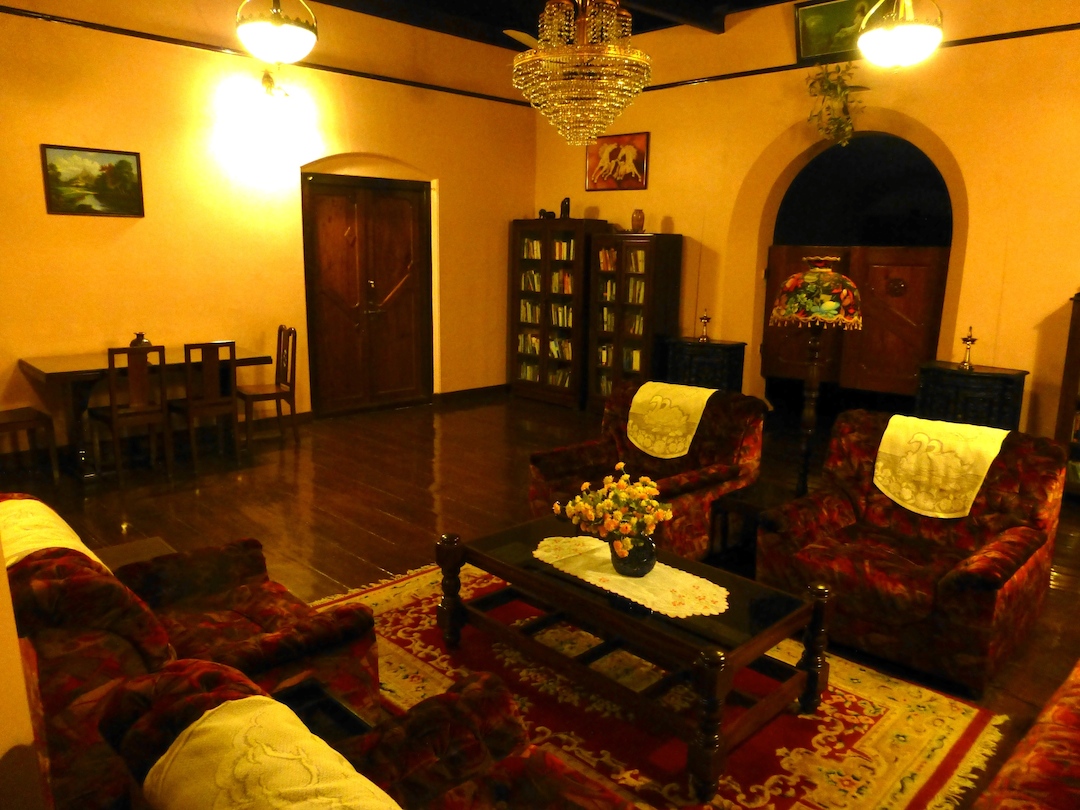
Accommodation: We stayed at Hotel Padmam which I pretty much covered above.  It seems the city is somewhat divided between the old town south of the river where the temple and action are, and the less exciting but likely nicer area north of the river.  I believe there are a couple nicer hotels there, and since being in the action in Madurai isn’t that great and you really just need to visit the temple, you might want to stay in one of those nicer hotels.

Temple: Modest dress is required.  Full pants for men, no hats.  You cannot wear shoes but can check them for free at each entrance.  There is an outside wall where you would check shoes, etc. and then you can enter the space in between for free.  To enter the actual temple, foreigners have to pay Rs 100.  You may not bring a camera inside.  However, you can bring a mobile phone inside, and for Rs 50 you can take pictures with your phone.  This all seems odd and is contrary to what I had thought, so you might double check for yourself even though we asked several people.  When you see the really long line of Indians waiting to enter the temple, walk around it, pay the Rs 100 and walk right in.  Unless you are Hindu, then maybe that line is where the shrine line begins.

Shopping: We went to the roof at The Museum Company at #26, West Chitrai Street, Ph: 0452 2346043, fortroyalmadurai@yahoo.com and our man was Gowhar aka Miya.  I cannot speak to the quality of the product nor how it compares to other stores, but it appeared to have nice wooden art and jewelry.  And he said we could leave our footwear there when we visited the temple.

December 25-27, 2013 (Wednesday-Friday)

Tea with Celine Dion

After Kerala’s backwaters we headed east for the hill country.  Munnar is set in the mountains surrounded by waterfalls and tea and cardamom plantations with cool, fresh air.  It was most pleasant and turned out to be a perfect place to spend Christmas in India.

Munnar is a small town in Kerala, though the surrounding area is generally all referred to as Munnar.  After nearly five hours of driving from the backwaters, much of it rather jarring, we checked into Casa del Fauno, our home for the next four nights.  I have included pictures below and details on the property in the Practical Info section.

Sidebar: near Kochi there was a cop going up to every driver with a little brown box and asking them to blow into it.  Random, low-tech breathalyzer, at 9:15 am.

As I write this we have already visited Madurai and I am now in Mumbai, thus confirming how comparatively relaxing were our first nine nights in India!  In Munnar, we did two half-day activities and spent the rest of the time reading (I finished 4-Hour Workweek and put a nice dent in The Kite Runner), writing, mellowing out and listening to Christmas carols.

Sunday morning we were picked up by a jeep for a half-day tour up to the Kolukkumalai tea estate.  The scenery was gorgeous but the ride was brutal.  Bring Advil, and I think Jenni would advise doubling up on bras.  We rode in a Mahindra, Land-Cruiser style jeep up into the mountains on some path that was a mix of dirt and large stones.  You could not drive this route without a jeep or truck.

Our driver was from the area and knew everybody.  While most conversations I have observed seem to take three times as long as I’d expect, with our man it was the opposite.  He would just quickly shout things out at pretty much every person we passed.  And he LOVED the camera.  He would offer to take a picture of us and then take five more of our surroundings, fidgeting always with the zoom.  He was about making things happen, and I liked him.

After climbing more than an hour, we arrived at a ridge with views across the cloud-covered valleys below.  It looked like we were in an airplane, or Jurassic Park.  Just beyond here is the aptly named Echo Point.  The simple pleasure of a great echo is ageless.

We passed by a few women working the tea plantation seated on the roadside for a food break, and they pointed out a couple nilgiri tahr at the top of the hill above us.  The nilgiri tahr is a rare mountain goat found in these parts (see more in Practical Info, below).  A sprinkling of back damage and touch of sore bum later, and we arrived at the tea factory.

Kolukkumalai claims the title of the highest organic tea estate in the world.  We took a tour of the small factory where the process still involves much manual work supplementing English-built machines dating back 50-100+ years.  Converting tea leaves to tea is a seven-step process.  I won’t bore you with all the details, but these steps are withering, rolling, sieving, fermenting (oxidation), drying, fibre extraction and grading.  The withering takes place in long troughs upstairs where hot and cool air blows the leaves alternatively, after which they are fed into chutes and the remaining steps occur downstairs.

On the way home we stopped for lunch for our umpteenth paratha (I’m sure you’ll read “paratha” many more times) and a little curry sauce.  This cost Rs 75 for two!

The whole tour we did not see any other white folks.  Munnar is a popular destination for middle class Indians looking to escape the heat and enjoy the hills.

After we returned it came up that Jenni and I had each taken a liking to this song but hadn’t said anything because we didn’t think the other would understand.  Jenni did a little internet sleuthing and found a link.  Kind of corny but so soothing…enjoy!  Jenni was ecstatic playing this over and over that afternoon.

That night we made new friends (a man from Thrivandrum living in Beijing, and two of his friends) and a group of locals regaled us with Christmas carols, Indian style.  I knew that Kerala had more Christians than most of the country, but I did not appreciate the extent.  On our backwaters boats were pictures of Jesus, ditto the jeep’s mirror ornament and we have seen many churches.  Casa del Fauno constructed a manger for Christmas Eve.

We also heard “So This is Christmas” by Celine Dion the first few times on Casa’s stereo.  Casa had maybe eight different holiday songs that they kept playing, but none more so than Celine.

Monday we walked the cardamom plantation with Anoop, the kind and soft-spoken property manager.  Cardamom grows in bunches of plants which themselves produce bunches of pods close to the ground.  After harvest the pods are dried before being sold at wholesale.  The property and surrounding area also include bananas, mangos, coconuts, hibiscus, jackfruit, coffee and several flowers.  It is most lush and beautiful.

While on the tour we also saw their lily-graced reservoir, Anoop pointed out a recent elephant footprint that was about the size of four basketballs, and we met some ladies breaking for food who were so warm and friendly.

Anoop told us the workers get paid Rs 250/day plus food, accommodation and school for the children.

We continued down the road and passed a man with his goats speaking on his mobile.  Then we left the pavement and crossed a hillside with ancient pygmy rock houses before ascending some steep rocks to reconnect with a different road.

A handful of smiling kids and kittens later, we returned to the Casa and later enjoyed a perfect sunset over the hills.

I enjoyed the food at our hotel and fell in love with this spicy pickled mango sauce.  Also, there was an endless supply of crisp papadums each lunch and dinner.

Tuesday we relaxed and had a bottle of mediocre Four Seasons shiraz before/with our Christmas Eve dinner.  We met a fun family from England and the mood was jovial with a warm fire (wood and a coconut shell towards the end) and many fireworks.  One of the staff threw those loud poppers until the whole bag was gone.  Jenni had the honor of cutting the fruit cake, and the stars were excellent.

But the highlight was definitely good ole Celine.  After Anoop had played So This is Christmas twice in the span of three or four songs, we eyed him going back to fiddle with the stereo.  I gave Jenni the fist clenched, elbow tucked “yessssss!!!!!” sign and he saw me, then proceeded to play Celine again.  Caught red-handed he came over and smiled and said sheepishly “I like this song very much.”  It was adorable and we had perhaps our best laugh of the trip.

We departed on Christmas and the staff insisted on taking pictures with us.  The drive down to Madurai was beautiful and spirited, on a rough mountain road with many hairpin turns and areas where landslides had covered half the road with rock or simply made half the road disappear.  Plus, an elephant crossing sign.

Munnar was beautiful, lush and relaxing.  Often I had to remind myself I was in India.  If you are looking for a stereotypical Indian cultural experience this is probably not the place, but to see a calm and peaceful side of this amazing country it is a good choice.

Practical Info

Transport: From our backwaters stay a bit south of Kochi, it took four hours by car to reach the town of Munnar and another 45 minutes to Casa del Fauno.  We paid Rs 3,400.  The last 1/3+ of the drive is on winding and often rough roads.  There are buses to Munnar but I do not think a train, and you will need private transportation to get around the area.  As all over India, your hotel or guesthouse can likely arrange tours and local and onward transport.  If given the option, it might be worth having your destination arrange the transport as that increases the likelihood your driver can find the place.

Accommodation: Your first key decision is whether to stay in the town of Munnar or the surrounding areas.  Munnar itself did not appear particularly charming but may have more budget options and offer a convenient base for exploration.  If you want more attractive environs, I recommend staying outside of Munnar.

We stayed at Casa del Fauno which is about 25 km beyond Munnar (coming from Kochi), closer to the town of Chinnakanal.  It was a (modest) splurge as we wanted a comfortable, peaceful environment for the holiday.  Casa del Fauno is a restored bungalow on the Peak Gardens cardamom plantation.  There are three rooms in the main house and some cottages just downhill.  The main house is lovely and cozy with nice hardwood floors and high wood ceilings and a wood-burning fireplace.  It felt like being in a friend’s home.  Our first three nights we stayed in the Deluxe Room in the main house which was spacious and opened to a common patio overlooking the small lawn and valley and mountains beyond.  This had already been booked for our fourth night and we were promised the Elegant Room also in the house but instead (for the same price) we got the honeymoon bungalow.  This was similar to our Deluxe Room but slightly larger, more private and with a large terrace overlooking the hills.  WiFi is only available in the main house, and may only work effectively in the Deluxe Room which is next to the router.  Breakfast is included and freshly made tea or coffee is available throughout the day.  Tasty Keralan lunch is served for Rs 250 and dinner costs Rs 500.  If you want alcohol you need to request it in advance and someone will go to the store to purchase it.  Casa del Fauno does not take credit cards.

We also considered staying at Windermere Estate, Anearangal Camp at Suryanelli, Siena Village and British County (run by the Tourist Desk with offices in Kochi).  Siena Village is well-reviewed though we passed the property and it is more in a town vs. Casa del Fauno which was really set in the forest.  Nearby our hotel are The Wind and Spice Tree.  Our driver also mentioned Club Mahindra.  Stanley Wilson (tour operator out of Kochi who booked our backwaters trip) runs a 3 day / 2 night tour for Rs 11,000 that might be a good option if you want to be efficient and economical with your time.

Activities: Popular activities include tea and spice plantation visits, the tea museum in town, scenic tours (e.g. to Top Station), trekking and visiting one or more of the region’s national parks and wildlife sanctuaries.  The famed Neelakurunji plant grows on the mountainside here and flowers once every 12 years.  My book says that late 2018 is the next bloom.

Our jeep tour to Kolukkumalai cost Rs 1700.  We had the jeep to ourselves and it could have seated more, though I do not know if the price would differ.  We had to pay Rs 100 for a road maintenance fee on the way, and one can only imagine what the “roads” would be like without maintenance.  At Kolukkumalai, it costs Rs 100 each to tour the factory.

Eravikulam National Park is considered the place to see the nilgiri tahr.  Chinnar Wildlife Sanctuary is also in the area.  We read and heard that Periyar Wildlife Sanctuary may be disappointing.  Attukad Waterfalls look impressive, though I think pictures you will see were probably taken in the rainy season.

Munnar

Driving in India is generally not a whole lot of fun (traffic, bad roads, general lack of order/following of traffic laws, etc.). Driving from the backwaters to Munnar was no exception. We hit heavy traffic near Cochin, including at one point waiting at a traffic stop while everyone was breathalyzed. At 9:15am mind you. Thankfully, our driver passed, though it was questionable given his driving skills. He was probably the worst driver we’ve had yet. Though he did introduce me to the Cham Cham song, which I’m now obsessed with. Listen to it a few times and tell me you don’t find yourself singing “Cham Cham” hours later…

Anyway, all was nothing but nice from there. Our hotel in Munnar (Casa del Fauno) was a wonderful and cozy little abode tucked away in the hills where we could relax, explore and enjoy Christmas. We spent a lot of time here (most afternoons) hanging out on the porch or in the common room or our very spacious bedroom drinking milk tea and enjoying the peacefulness of hill country. It didn’t hurt that they were big on the Christmas decorations. The festiveness, paired with the much cooler weather up in the hills made it Christmas cozy.

The food was pretty amazing too. We ate all but one of our meals at Casa del Fauno, and while you aren’t provided much (anything) in the way of options, you are presented with an incredible array of curries, rice, various Indian breads, and papadum at each lunch and dinner (and tasty Masala omelets at breakfast). And of course, tea. Lots and lots of milk tea was drunk.

One morning we took a Jeep out to the hills to see the tea plantations and tour a tea factory (highest organic tea plantation in the world apparently). The Jeep is very necessary. And it is a bumpy ride. How bumpy? Ladies, wear a supportive bra (or two). That is one hell of a ride. I never thought it possible to be so battered by a drive in which the airbags have not been deployed. Worth it though! Spectacular scenery up there. And there is an epic echo spot where your yells bounce around the hills maybe four or five times. We did not see any other non-Indian tourists, though we did pass several other Jeep goers. We’d read that Munnar is an up and coming tourist destination for middle class Indians looking to escape the heat, and this seems to be very true. At our hotel as well, there was a mix of Indian and European visitors, though curiously everyone seemed to stay only one night, while we kept still for four. I suppose there isn’t too much in the way of things to do up there – see the tea plantations, visit the top station, maybe a visit to Eravikulam (the national park where you supposedly can see elephants and (very rarely) tigers). We stayed long and did little as we were trying to enjoy a low-key Christmas and add calmness and tranquility to our zen bank before the next two weeks of intense-India.

Our driver loved taking pictures of us and for us. I think he took more pictures than we did (often of really uninteresting things haha. He fancies himself a photographer I suppose). His taste in music was fun though, I’ll hand him that. We were untz-untzing it all through those hills. And the man knows how to handle a Jeep on some brutal roads. Please note that the little green handle you see there is the closest you get to a door or seat belt! I think I got my (right) arm workout in just gripping for dear life. 😉

P1040147

The tea plantation was pretty neat. All the machinery there is 100 years old, and still functioning. Where most tea plantations have moved onto to better and faster technology, this one is still all done manually.

On the way back we grabbed lunch at a local restaurant. We were a little nervous this village resto could be the spot to break our streak of not getting sick, but luckily some parathas and mystery veggie curry didn’t do us in. Didn’t hurt that the lunch cost about $1.25 for the two of us, plus I got a dessert for Rs 1 (approximately 2 cents)! It was a packaged cookie thing and nothing special, except that it cost one rupee! (This of course excited me even more than a $1 meal.)

The next morning Anoop, the property manager, took us out for a walk around the grounds. The hotel sits on 85 acres of a cardamom plantation. It’s really lovely here. Beautiful flowers of every color everywhere you turn, and lots and lots of cardamom. He showed us what all the plants are, an impressive array of banana, jackfruit, mango, oranges, coffee, mulberry and hibiscus (to name a few). He taught us how to suck the honey out of the hibiscus, yum. We even saw tracks from where a wild elephant had come through and trampled the cardamom plants. Those were some BIG footprints. Very glad we didn’t encounter that elephant up close. Can you even imagine? We also stopped to meet some of the ladies who work on the plantation, picking cardamom pods. They were super sweet. I loved their earrings, with the chain that wraps around the upper part of the ear.

Afterwards we took a little hike further down the road and back up a big rocky hill where we saw 500 year old rock homes used by the pygmies. On the return back we saw even more adorable Indian kids, and I nearly peed my pants when I realized one of them was holding a pile of kittens. A PILE of them. Cuteness overload. They couldn’t be more than a few weeks old.

There is a large Christian population in Munnar, and they are big on Christmas here, especially at our hotel. We were treated with Christmas carolers one night. A group of 15 or so men singing and drumming backed up the two dancing santas in front. Check out a video here. We also had fires in the evenings and Christmas fruit cake! The decorations seemed to multiply by the day, culminating with baby Jesus in a manger out front on Christmas Eve.

Christmas Eve was pleasant. We had a lowkey day, not doing terribly much of anything. Anoop ran to the liquor store and picked up a bottle of red wine for us, and we enjoyed this by the fire while we made friends with a lovely British/Welsh family visiting. All the hotel guests (really only us, the British family and one other couple) and staff gathered around to cut the Christmas fruitcake. I was bestowed the honor of making the first cut, probably because I had a Santa hat to don. Alan and I were cracking up when Anoop restarted Celine Dion’s “So This Is Christmas” for maybe the 20th time. He sheepishly said, “I like very much this song.” We noticed, Anoop, we did. I had told him the first night that I loved the Christmas carols, and he ensured us that he had 7 CDs worth of carols. We never got to hear those other 6, nor probably the whole of the first, as Anoop was so so into Celine. After dinner the guys lit some fireworks and sparklers in the yard. Anoop even invited us to midnight mass, but we politely declined. It was a Christmas to remember, for sure, but we were of course missing our family, the tree, stockings, presents, the ham, etc. etc…

I was sad leaving Munnar. We spent so long there it was starting to feel like home. And we spent a lot of time with Anoop and crew, they were our makeshift Christmas family. I think they liked us too, as they all came outside to bid us farewell and we took turns passing around cameras to get a picture of us all together.

On the drive out I saw signs for elephant crossing. I’ve seen signs for a lot of random animal crossings by now on this journey, but this was the first elephant crossing sign I’ve ever come across.

Merry Christmas!

Merry Christmas! Happy Holidays! Happy New Year!

With love from Jenni & Alan

We’re in Munnar, India, enjoying Christmas with some Malalayam carolers, a roaring fire, and some Christmas fruit cake 🙂 While it doesn’t come close to my mom’s Christmas ham, biscuits and deviled eggs, we’ll be enjoying some spicy Indian curry and a bottle of (sort of) fine Indian wine tonight for our Christmas Eve dinner. We’re missing you all this holiday season!

The Backwaters: Kerala, India

It hit me here, how fortunate we are to have this experience. I turned to Alan at one point and said, “babe, we’re unemployed. And we’re on a houseboat. In India.” What an experience.

We chose the more off-the-beaten-path option for a backwater houseboat. The more popular choice is to go down to the port in Alleppey and choose from one of the 1500 houseboats with electricity, air conditioning, motor power, and second floor sun decks. Instead, we took a boat from a more remote village, where there are only three houseboats, no electricity (although there is solar power so you can turn on lights and a fan at night), no air conditioning and the boats are powered only by two men who punt. Standing at the front and back, each with long bamboo poles, they propel the boat along the shallow waters by staking the poles in the ground and pushing. Talk about zen. Pure relaxation. I kept thinking to myself, “we have got to be in the most serene and peaceful place in the whole of India.”

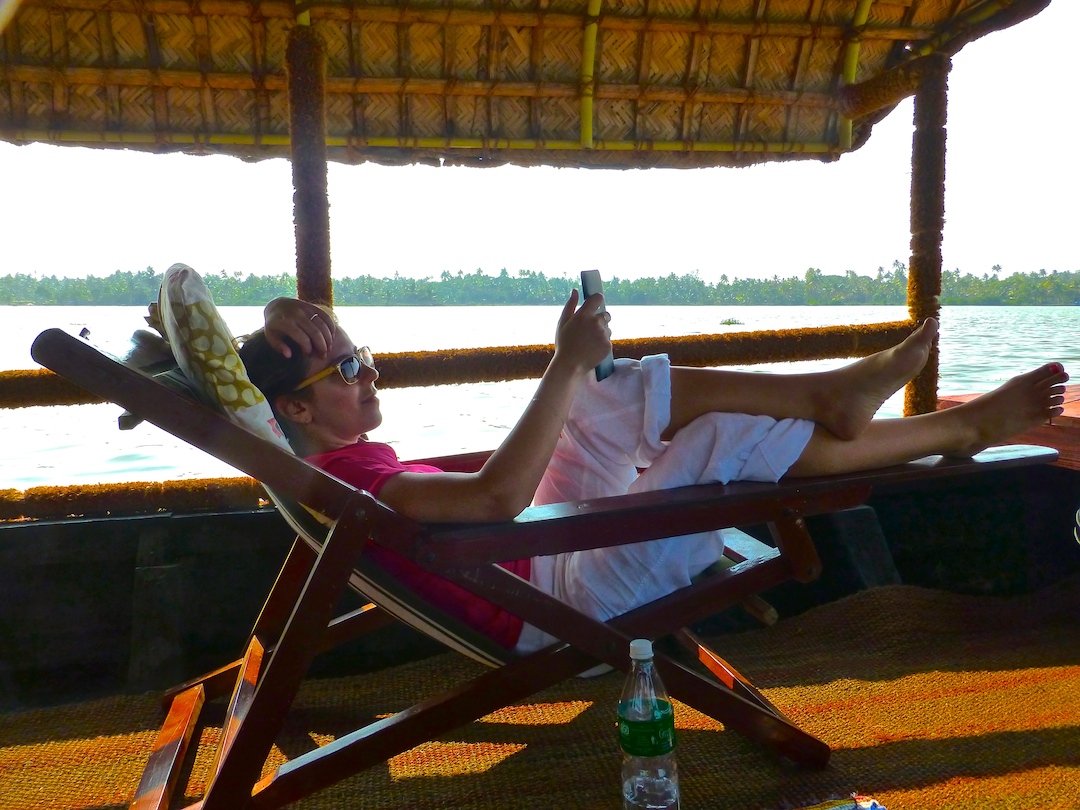
While our guys at the front and rear punted away, and Manu cooked up some phenomenal eats, Alan and I read. And read and read and read. I read an entire book the first day, and the better part of another the second, until I ran out of reading material. And we relaxed. I haven’t felt this relaxed in I can’t remember how long. (P.S. – The Wonder Spot by Melissa Bank, awesome. Thank You For Your Service by David Finkel, devastating and powerful read.)

::reading, relaxing::

We docked for a quick excursion to a little fishing bay where we saw a boat coming in and Alan stepped in to help the guys push the boat up onto the sand. We watched for a while as they pulled their impressive catches from the nets. A lot of work for some small fish, but there sure were lots of them.

After lunch, anchored in the middle of a large brackish pond, we are surrounded by palm trees on all sides, and the only sounds we hear are the myriad of birds and the gentle ticking of the palm leaves in the wind. I loved watching for kingfishers – such beautiful birds.

The rides back towards the dock as evening nears are still relaxed, though just as relaxed as they can be when every so often you pass a child on the side that says, “Hello, what’s your name? Give me one pen, please.” We sadly had no pens, but still had some fascinating conversations with these kids. Some wanted to chat more, and one particular boy, who aspired to be a sound engineer or a movie star, wanted to know if we liked Justin Bieber, had we ever seen him? (The kid’s got beliebers all the way out here.) The same boy wanted to know if our marriage was arranged or by love. Alan misheard and told him it was “by law.” Haha, my husband the romantic 😉 By the way, people in Kerala speak Malalayam, not Hindi, though many know Malalayam, Hindi and English, including all three of their varying alphabets. I hadn’t realized how many languages are spoken in India!

We tried out the little canoe, which was lovely until a creepy jungle spider came in and ruined my zen. Ugh, confined spaces, arachnophobia. It was bad. I had to switch sides with Alan so he could whack it with an oar, and the people onshore thought there was a snake in the boat given my reaction.

Overnight we stayed docked at the village, and lest we forgot we were in India, she gave us a little sensorial stimulation. Out of nowhere there was music coming from several different places, and then fireworks, apparently.  We enjoyed our bottle of Indian wine (France need not start worrying about the competition), and ate our dinner while watching the sunset. Sigh.

Having run out of reading material on day two, I entertained myself that night while Alan read by playing cards (I remembered that I packed a deck of mini playing cards that I bought at a gas station in Minnesota! good call me) and then retiring to watch the geckos/lizards eat the flies off the walls and ceiling of the boat. Surprisingly entertaining, I have to say.

P1040027

We’d signed up for only one night on the boat, the second night to be spent in the farmhouse, and had planned on exploring the little village by auto rickshaw or scooter. Instead, we opted for a second night on the boat, choosing to soak up this relaxing experience as much as we could. We definitely got the “B” team on day two. Poor guy, I don’t know if our head punter was sick or tired or what, but he dropped his bamboo pole in the water, dropped the rope when he was leading the boat from the banks, and ran the boat into the wall as we passed under the one bridge. Oopsie. Ask to be on Manu’s boat if you check this place out (Stanley Wilson’s eco-friendly tours (we obviously recommend you do!)), his English is fantastic, his cooking even better.

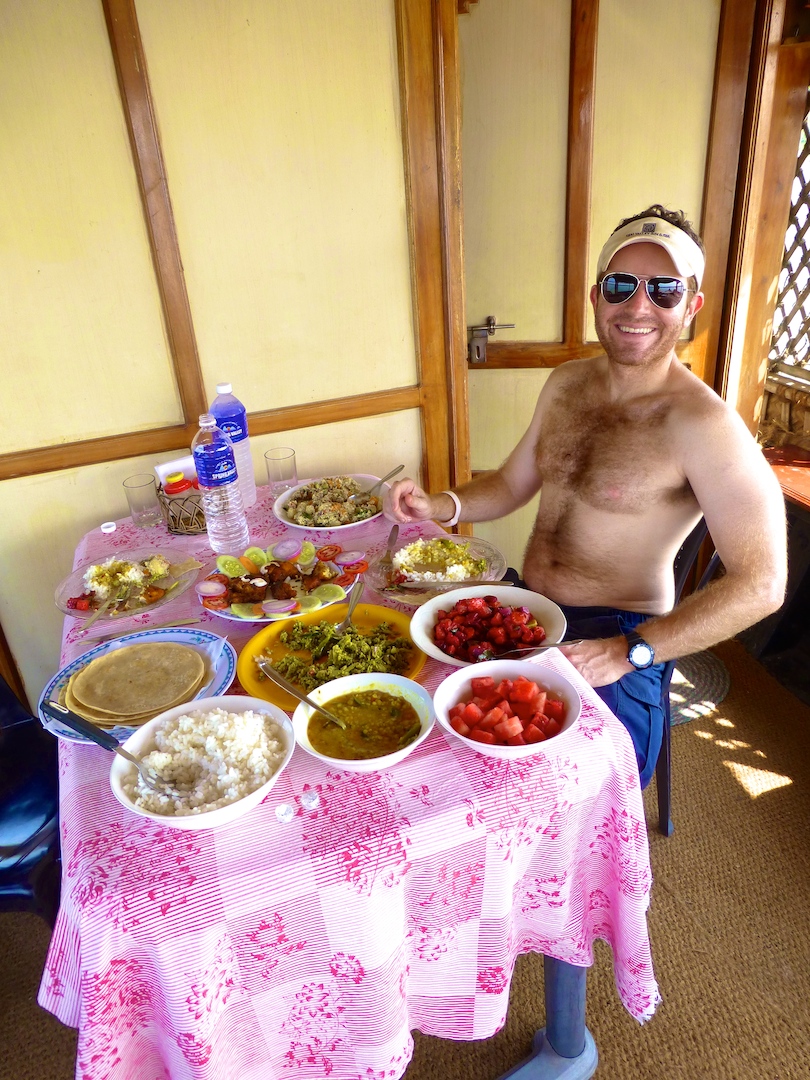
::insane amounts of insanely delicious food::

One Pen, Please

P1030927

We planned 3.5 weeks in India, and most of our time was TBD but for two places: Varanasi and the backwaters of Kerala.  I had read that spending time on a boat in the backwaters was a relaxing experience that also offered a glimpse into village life in southwest India.  My expectations were high, and I was not disappointed.

I arrived in Kochi fully intending to arrange a two-night motored houseboat out of Alleppey, about an hour and a half south.  There are many options for a backwater experience including a day trip on a public ferry between Kollam and Alleppey.  My comments on all except the trip we did is from reading and word of mouth, so I will write as though it’s fact but I cannot confirm.

Alleppey is by far the most popular place for booking houseboats, and these days there are hundreds if not more than a thousand.  Many of these are fairly luxurious with air conditioned bedrooms and an upper deck with sofas.  It sounds great, but word is at least at this time of year the Alleppey area has gotten so crowded that you might wait in a line of boats to make a turn.  And the water is oily.

In Kochi we popped into Walton’s Homestay to see if they arranged backwater tours, and Mr. Walton fortuitously directed us a couple doors down to his friend Stanley Wilson.  Stanley told us that he worked for years in Alleppey, but that the original intent of a relaxing float had become a victim of its own success.  As more and more tourists, both domestic and foreign, wanted a houseboat tour, the boats became bigger and more luxurious and the area more crowded and polluted.  He offered a simpler and more eco-friendly alternative.

Stanley arranges punted boat tours from a village about halfway between Kochi and Alleppey, with solar power during the day when the boat is out on the water.  Punted means that men propel the boat by pushing long bamboo poles on the water bottom.  Except when we passed through a canal lined with stone walls, when the boat men disembark and pull the boat using a rope.  They do this because punting is hard work, as Jenni and I both learned when we gave it a try.

There is no air conditioning and no upper deck, but also no noise.  Stanley promised our money back if we saw more than three other boats, and I am happy to say he still has our money.

After an hour drive from Kochi, we arrived in the village and boarded the boat at 10:30 am.  We were accompanied by two boat men and Manu, a great cook who speaks English very well.  The boat is made of wood and bamboo and has a simple kitchen in back, a basic bedroom and toilet with sink, and a front area with a dining table, some comfy lounging chairs and a side table.  The front is covered so you do not roast in the direct sun all day.

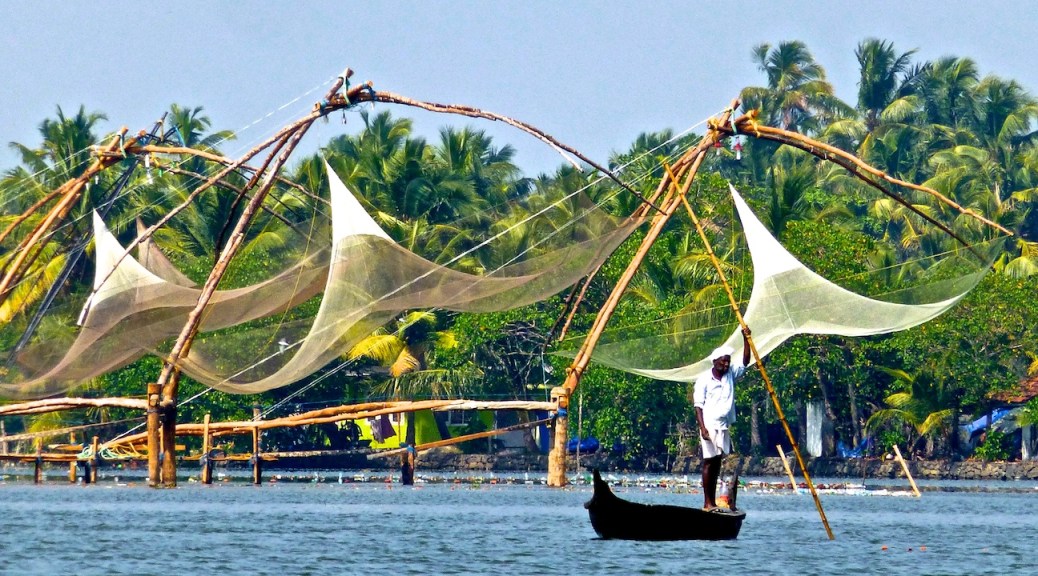
As we glided through the backwaters we passed between wider and narrower channels, surrounded by palm trees and many birds including ducks, egrets, cormorants, storks and kingfishers.  We saw tiger prawn farms and men in canoes laying out fishing nets in a circle.  There were lots more Chinese fishing nets like those we saw in Kochi.

The villagers onshore always stared and almost always waived and said hello.  Kids were full of smiles and relentlessly asked for “one pen, please.”  So if you can fit them in your luggage, bring a boatload of pens to throw to these adorable youngins.  And one group of boys who walked alongside our boat for a while said they love Justin Beiber, so maybe bring some Belieber paraphernalia while you’re at it.

While much of India is frenetic, the backwaters epitomize relaxation.  Jenni and I each commented that we could not recall the last time we felt so relaxed…perhaps on the second half of our honeymoon in the Maldives.  The food was delicious and enormously apportioned.  Coffee and tea were offered multiple times.  We had fresh fish with each lunch and dinner plus rice, okra, curries, freshly made chapati or paratha and watermelon, pineapple or banana for dessert.

The first night we drank a bottle of Sula chenin blanc that we purchased in Kochi.  We knew Sula from the bubbly we had the first night of our honeymoon last year in Jodhpur.  The winery is located in Nashik in the state of Maharashtra, India’s burgeoning wine region.  Time may tell, but for now Napa and Bordeaux ought to rest easy.

The one thing about this arrangement that may be better on the Alleppey boats (I am not sure if it is the case or not) is that at night we are anchored yet also docked back at the village.  In other words, the boat is pointed out towards the water so you still get some of the feeling of sleeping out on the water, but it is not the same as being anchored in the middle of a lake.  On the bright side, when docked there is electricity so you can charge devices and you can take their dugout canoe for a spin.

We could also hear music and fireworks both nights, as if to remind us this was still India.  But the noise subsided before bed time.  Some of the fireworks were so loud.  Remember that if you are in India and it sounds like war is breaking out, stay calm.  Most likely it is not.

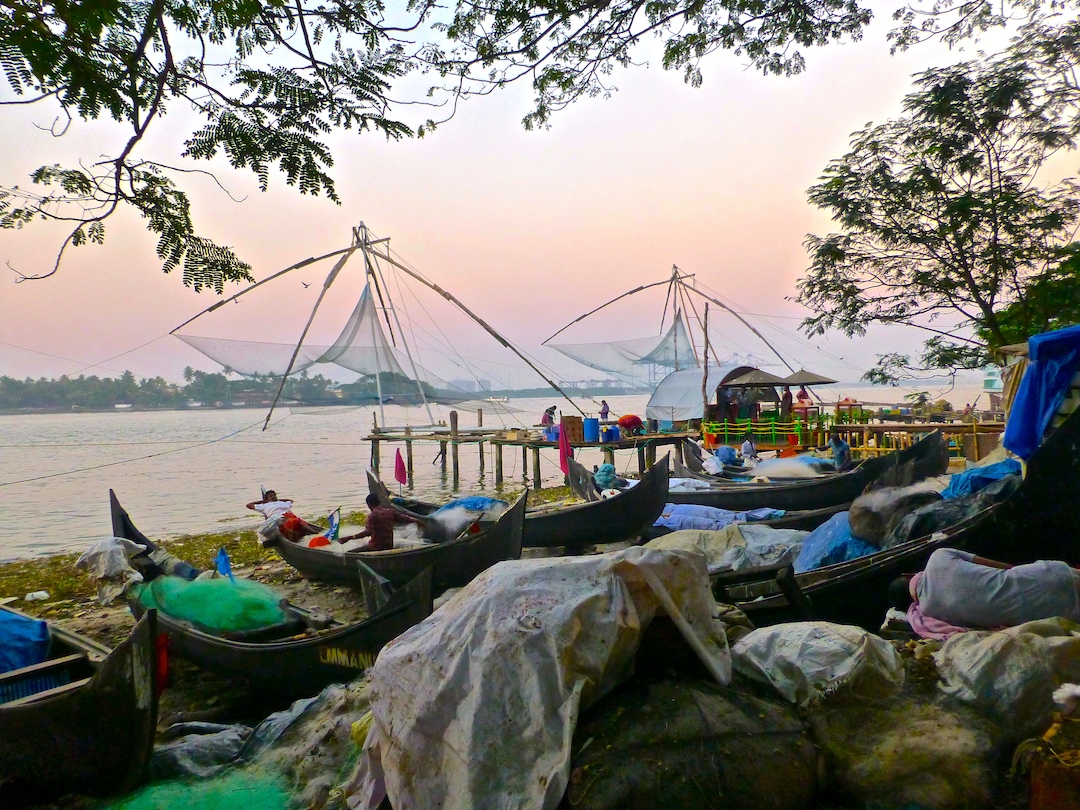
On our first day before lunch the boat docked across a wide waterway and we walked five minutes to the Arabian Sea.  There were so many colorful wooden fishing boats and I helped push in a new arrival loaded with mackerel and catfish caught in a chicken wire like net.

On the walk over one of the boat men pointed out a fruit tree that looks exactly like mango, only this one he said is poisonous.  Good to know…

We had made arrangements with Stanley to spend the first day and night on the boat and the second day onshore and sleeping in the village home stay.  We so enjoyed being out on the boat that on Saturday morning we called an audible and switched to the one of their three boats that was free that day.

As I wrote above, I have no personal experience with a motored houseboat from Alleppey and I imagine it could be wonderful.  Among other things, two-bedroom houseboats are offered which is not so at Stanley’s village.  These boats might also anchor out in the water, which sounds nice.  If you are interested in going that route, this post from globetrottergirls.com seemed sensible and helpful.

Our taxi from Kochi cost Rs 600 and each night on the boat was Rs 4,000 with all meals included.  Had we stayed in the village that night would have cost Rs 2,500 without AC or 3,000 with AC.

It is worth noting this was a good reminder that sometimes you just have to trust people.  We paid Stanley in full in advance.  This is slightly unusual, but he came recommended from a hotelier who seemed trustworthy and was recommended in my guide book (the hotelier, that is), and Stanley has a permanent office on a busy tourist street in Kochi.

Two nights on the backwaters was perfect for relaxing, reading and writing.  I made it through 500+ pages of Mandela’s book Long Walk to Freedom.  If you want a quintessential south India experience, I highly recommend unwinding here for a couple days.

You can find Stanley at www.wilsontours.co.in, stanley.wilson@rediffmail.com, (+91) 98474 76750, or the old-fashioned way on Princess Street in Fort Cochin

Also, check out these neat aerial photos provided by Kerala Tourism.


December 19-21, 2013 (Thursday-Saturday)

Kochi

Kochi (or Cochin) is a coastal city in the state of Kerala and a popular destination for tourists.  We spent three nights and two full days here and found it to be a nice mix between city and village feel and a great place for easing into India.

Kathakali show
Kathakali show

It did not take long to get our first taste of the brutal Indian traffic when our modern airport public bus took more than two hours to reach Fort Cochin.  Spacious and calm enough to start, the bus quickly became very crowded.  Though nothing like the older, regular public buses.  On the way we passed countless Bollywood billboards and crossed Ernakulam, which is the more modern and big city part of Kochi.  Most visitors stay in Fort Cochin which occupies the western peninsula along with Mattancherry, and I recommend you do the same.  Unless perhaps you stay at the Taj on Willingdon Island.

Rough Guide sums up the peninsula’s appeal nicely: “Spice markets, Chinese fishing nets, a synagogue, a Portuguese palace, India’s first European church and 17th century Dutch homes can all be found within an easy walk.”

Chinese fishing nets

After checking into our spacious room at Chiramel Residency, we had dinner at Dal Roti, a very popular and cheap restaurant that happened to be next door.  The butter chicken was tasty and we had our first of many parathas, the doughy delicacy we fell in love with on our honeymoon.  Albeit the versions we’ve had in southern India have been a little larger and more fried.

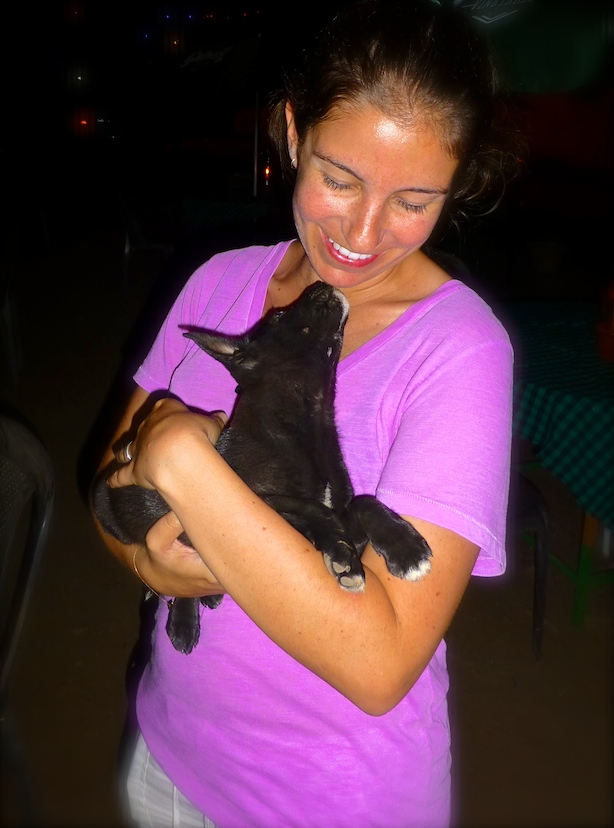
Eager to explore a little, we walked over to a bar and met a few locals and their adorable puppy named Blacky.

P1030672

Whenever we tell people we are from America, one of the first things they say is “oh, winter, it’s really cold, yes?”  Then we get to chuckle and say “not in Cali.”  And Obama may not be that popular in the US, but he is here.

Tuesday was mainly a work day, planning out some more of our time in India, getting my SIM-switched iPhone to function, etc.  It is shocking how inexpensive medicine is here vs. in the US.  Jenni has had sinus problems for a while so we bought a 3-pack of Zithromax for…$1.  In the early evening we walked over to see the Chinese fishing nets and the area was crowded with locals and tourists.  We split Malabar prawn curry and a great mango lassi for dinner at the Old Courtyard.

Wednesday we planned to walk all day but had barely escaped our hotel when an enterprising tuk-tuk driver scooped us up with promises of a good tour for Rs 60/hour.  Our first stop was Saint Francis Church, the first built by Europeans in India.  It is historically interesting and Vasco da Gama was buried here before his body was later removed to Portugal, but the structure itself is nothing special.

The Santa Cruz Basilica is a far grander church.  Next we saw the pretty Dutch Cemetery before continuing to the dhobi khana where laundry is hand-washed by members of a low caste.

Dutch cemetery
Dutch cemetery

This was a fascinating stop for a glimpse into a long-standing practice that is probably going the way of the dodo in the coming years/decades.  Women and lungi-clad men scrub garments and linens before whipping them onto rock surfaces, the precursor to our spin cycle.  The cloth is then air dried by hanging between rope braids and finally it is ironed, folded and sorted.  While we saw a few jury-rigged electrical irons, many are heated by burning coconut husk.  This method requires more skill to maintain the proper temperature.  Either type weighs about 20 pounds.

From here we crossed to Mattancherry and saw the old Jewish synagogue which was impressive.  It is small but ornately decorated with hand-painted blue and white tiles, colorful lamps and a red and gold Torah ark.  At one time there was a substantial Jewish population here but most emigrated to Israel in the 1940s, when they left behind furniture and other large possessions that ended up in antique shops in the area.

Our guide definitely added value by taking us to the Jain Temple for the 12:15 pm pigeon feeding display.  A guy claps his hands and the pigeons circle and then descend to eat seeds he scatters.  They believe it is good luck for a pigeon to eat from your hand.  Jenni did that while I got crapped on, so we covered our cultural bases.  Also, a woman inside the complex gave us a quick tour where we understood maybe 5% of her words, most of which came at the end when she held out her hand and said clearly “OK tour is done, you tip now.”

For lunch we considered Kayee’s and its Rs 100 chicken biryani but the atmosphere was lacking so we opted for a water-side meal at Seagull.  The chicken biryani there was quite tasty.

After lunch we visited a spice warehouse with turmeric, cardamom, nutmeg, cinnamon and star anise, and then we saw a ginger seller.  This was neat as our guide pointed out where they dry the ginger a bit before soaking it with chalk and lime (the fruit) then drying it a lot, after which it lasts 7-8 months.  The contrast of the monochromatic ginger pile and art-covered courtyard walls made for a nice scene.

Our last stop on the tour (aside from buying some wine, for our backwater trip, through the bars at a government shop) was the Dutch Palace, which was actually built by the Portuguese though the Dutch augmented it.  It is bland from the outside, but holds some impressive mural paintings along with a smattering of palanquins and old weapons.

Kerala is known for its kathakali theater performances.  We caught a 5 pm show at the Kerala Kathakali Centre.  Though a tad slow at times, overall it was superb and a highlight of our stay.  The main show began at 6 pm, but attendees can arrive at 5 pm to watch the elaborate make-up process.  These gents paint their faces using all natural ingredients, generally different stones grated with coconut oil.  And the emcee was masterful hand-sprinkling sand into geometric shapes on the floor right by our seats.

In Kathakali there are no words, rather elaborate eye and facial expressions along with hand movements are used to communicate.  The pre-show included a demonstration of techniques and live percussion accompanied the show.  Traditional performance in villages can last an entire night, I think we saw the equivalent of one act in a play.  The Kerala Kathakali Centre offers a host of other programs, too, such as yoga, music, martial arts and more.

After the show we ate at Malabar House, an upscale boutique hotel with a courtyard restaurant.  I enjoyed the Lamb Kerala we split.  It is not the best value, but when you can have live music in an appealing setting and pay $11 for a lamb dish it’s hard to get too upset.

Practical Info

The exchange rate was about 62 Indian Rupees per 1 US Dollar.

US citizens require a visa prior to arrival.  It is a fairly cumbersome and expensive process.  We worked with Travisa and paid up for 10-year multiple entry visas so we can come and go as we please.

ATMs are widely available.

Often “hotel” really means a restaurant, not lodging.

Most accommodations double as a travel agent of sorts and can at least arrange local tours and transport if not more.

Communication: India has become much stricter since the 2008 Mumbai terror attacks so purchasing a SIM card required a copy of our passports and visas, submission of passport photos and a little waiting.  We had to fill out a lengthy form and provide a local address.  Then we had to dial a number and verify our name, father’s or husband’s name and local address.

We purchased Airtel SIM cards at Shop n Save on Princess Street in Fort Cochin.  They were helpful and made the photocopies for us.  We paid Rs 399 which covered the connection fee plus value on the card, and it was easy to refill the cards there and should be elsewhere, too.

WiFi is widely available though connections have been slow.

Transport: After hearing a pre-paid taxi would cost Rs 990, we took one of the nice, orange AC buses from the airport for Rs 76 each to Fort Cochin.  Once there, we walked or used tuk-tuks which are everywhere in India.  Private cars can usually be arranged with ease and of course are much less expensive than in the US.  For example, getting from the backwaters to our hotel past Munnar we paid Rs 10/km (though at least on this route we had to double the count, i.e. for the driver’s return), which equated to Rs 3,400 for a 5+ hour trip.

There are lots of buses and trains, and conventional wisdom is that the train is a much more pleasant experience.  We also have multiple internal flights planned.  In addition to all the usual sites like Kayak, www.makemytrip.com may be a good resource.

Accommodation: We stayed at Chiramel Residency, an old heritage home stay near the Parade Grounds.  Our room cost Rs 3,000/night and was very large with high ceilings, beautiful hardwood floors and good AC.  A basic American breakfast was included.  The living room was beautiful and the staff friendly and helpful.  I liked the location a lot.  www.chiramelhomestay.com , 1/296 Lilly Street, Fort Cochin

We also considered Delight, Walton’s and Bernard Bungalow.  Around the corner from Chiramel is the Malabar House where we dined one night.  This Relais & Chateaux boutique hotel seemed lovely.  Brunton Boatyard is another more high end option.

Attractions: Check opening times because, e.g., the synagogue is closed daily from 12-3 pm.  Entrance fees were negligible, usually Rs 5-10.  Photos are not allowed inside the synagogue, the indoor parts of the Jain Temple or the Dutch Palace.

Our hotel booked the kathakali show for us and secured seats 7-8 in the front row.  This meant a little neck-craning but was the best vantage point for make-up and the sand painting.  Tickets were Rs 300 each.  There are a few other places in town that also have performances.

First Stop in India: Cochin

We really enjoyed Cochin. It’s not the crazy India you expect; it almost feels like India Lite. And it’s a very chill place to hang out for a few days. Cochin is a little city in the state of Kerala, one of India’s smaller states (but it’s still got 33 million people!) located on the southwest coast of the country. Our first three stops in India were all within Kerala (Cochin, backwaters and Munnar).

It didn’t take long for us to get confused in India. We de-boarded our plane and, unable to find a working ATM inside the airport, skipped the pre-paid cab station that required rupees. Once outside and armed with cash we couldn’t go back in and so decided to take the airport bus to Fort Cochin. It didn’t take long before the bus was packed like sardines and we were stuck in traffic. It took a while longer, but the two of us took the two-hour ride (plus a quick auto-rickshaw ride from the bus stop to our hotel) for under $2 total, air con included (well, natural air con in the auto rickshaw). Welcome back to India!

We stayed at a great little guesthouse with an impressive common area in which we were served breakfast each morning.

::Chiramel Hotel::
::Chiramel Hotel::

Our first day in town was spent mainly trying to make sure we had places to stay through Christmas and New Years. As always, the planning takes lots of time, and we tried to see if we could switch up our plans to meet my friend Aash in Goa, but couldn’t make it happen (super crowded Christmas to New Years, couldn’t find anything available in the area she’d be in). Oh well, we will save Goa for next time. Other highlights included buying a three-day pack of Zithromax for less than a dollar (yay prescription drugs in India) to try and clear up what now seems to be sinusitis that is occasionally prohibiting my left ear from hearing (to no avail – wahhh), and jumping through the unexpected hoops that are required to obtain a SIM card in India.

On our more eventful day in town we hired an auto-rickshaw driver for the equivalent of $1 an hour to take us to the handful of sites in Cochin and around. The highlights include: (1) Saint Francis Church. OK, nothing that exciting to me. (2) Next we saw the Dhobikhana where the former “untouchables” do all the town’s laundry. Apparently lots of tourists come here and see their skivvies blowing in the wind, including an Aussie woman we saw later that day. Funny. They have some old school irons and the real old school use irons that are heated with burning coconut shells.

(3) There used to be a substantial Jewish population in the area, though now there are only seven Jews in Cochin (8 counting Alan ;), and we saw the Jewish Synagogue which has a Chinese flair and is rather flamboyantly decorated. The floor is covered in blue and white Chinese tiles and there are tons of colorful chandeliers, lots of red and gold. Unfortunately no pictures allowed 😦 (4) Around noon we went to the Jain temple where we got the most useless tour ever, consisting of an Indian woman hastily walking us around and saying things we could not understand except for “OK tour over, you tip me now.” Haha. Again, no pictures inside (though this was also quite colorful and lovely). We stuck around for the guy to call the pigeons, at which point they fly around the temple four times and then gather to eat seeds out of peoples’ hands. That was pretty neat. I fed a few while a handful of people sort of sang. Very cool experience. Meanwhile Alan got pooped on – good luck!

(5) Stopped by the spice warehouse and a little area where they dry and preserve ginger (using chalk and lime juice). (6) Last, we saw the Dutch Palace, which is actually built by the Portuguese, though later improved by the Dutch. It’s rather unimposing on the outside, but there are beautiful paintings inside made from all natural colors (again, no photos allowed of the good stuff 😦 ). Also, note that entrance fees to these places were either nothing or 10 rupees each (that’s less than 20 cents total).

We stopped and bought bottle of wine at a liquor store for our upcoming trip to the backwaters. The windows to the packies are barred and we saw no women come by, though several men brown paper bagging it. Not much in the way of choices here, we opted for a Sula Chenin Blanc over the mystery white.

::Indian packie::
::Indian packie::

In the evening we watched the traditional Kathakali dance. Pretty impressive, though with sinus pain and front row seats I spent a lot of time hoping he’d bang the cymbals a little more gently. All the makeup is natural – made by rubbing various stones and coconut oil together. Pretty cool. The dancers have some legit skill – they train for a minimum of six years, learning to express the stories through facial expressions (some serious eye control) and gestures akin to a full-body sign language. We saw them applying the makeup, giving a demonstration of the dance and the meanings behind the moves, and then a short scene. The whole dance is normally around six hours long. Moves a bit too slow for my taste, but it’s definitely a worthwhile experience to check out the two and a half hour show!

We also ate a lot of great, really cheap food in Cochin (think meals at around $4 for the two of us). In fact, for lunch one day we just grabbed a fistful of the tiny bananas from a guy on the street for a few cents. Other highlights included Malabar tiger prawn curry, chicken biriyani, mango lassis, cardamom lassis, and of course, lots and lots of paratha. Though the paratha is a little different here than I remembered it in Northern India. I would be super content with a paratha and something to dip it in for every meal. But it’s hard to do that when all the food here is so freaking delicious. We also went to the fancy hotel (Malabar House) restaurant one night. We split a main because the portions are so huge everywhere. Good lamb, nice live music, but you can get such incredible food for practically no money, I’d say skip it.